
Tucked away in the Shivalik range of the Himalayas lies a hill station that remains a popular destination not only for Indians but also for international tourists. Visited by almost nine lakh tourists every year, Shimla is suitably the capital of the state of Himachal Pradesh. Its long heritage, heightened by British rule, represents a compressed history of India, one that is unique, evocative, and (for the lack of a better word), fun to experience.
I’ve heard many complaints from people who have said there isn’t much to see in Shimla or much to experience. But my travel to this famed hill station has been entirely the opposite. History and heritage lurk in every corner of Shimla, ready to be witnessed. From its iconic Mall Road to the momentous Viceregal Lodge, every place in Shimla is a treat to the sore eyes.
The Interesting Etymology of Shimla
Almost everyone knows about Shimla but very few people know the meaning of its name. On paper, its name is derived from the blue house in which a fakir used to live near the well-known Jakhu Temple. The house was built from blue slate and thus the name Shyamala (or the blue house) became Shimla.
Another theory recounts that the city’s namesake is due to the Kali Mandir that once stood by the hillside of Jakhu Temple. Shamli or Shyamala also means “blue lady”. In 2018, the government of Himachal decided to change the name of the city from Shimla to Shyamala but revoked their decision after facing a general backlash from the public.
When to Travel To Shimla
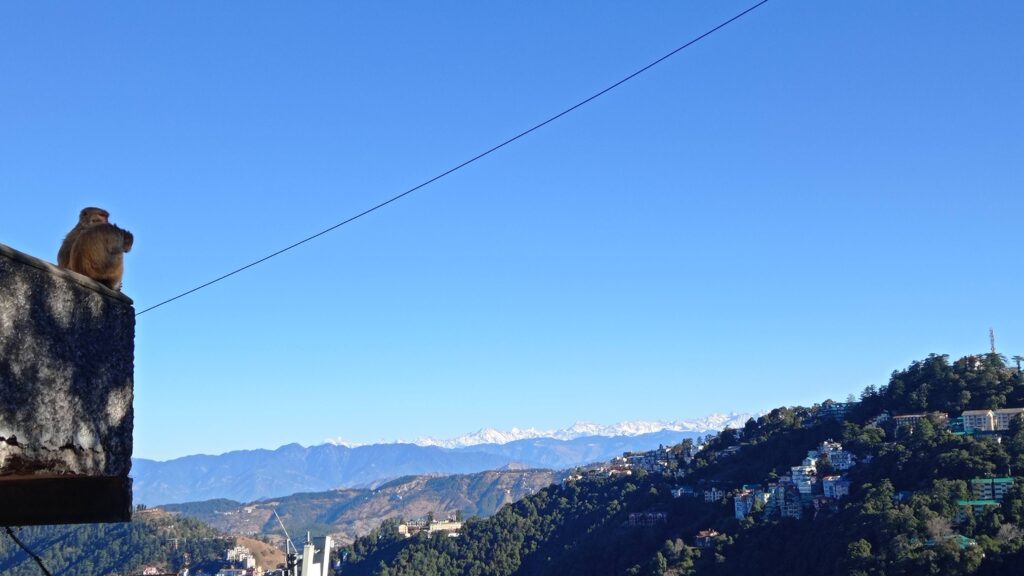
It was the unanimous decision of me and my friends to visit Shimla in late January because we wanted to see the winter of this beautiful city in its full glory. We were expecting to witness a snowfall as well but Lady Fortune was not on our side. Instead, we got to witness clear days and chilly nights, which if you’re planning to move around and explore in Shimla, is the best weather.
However, summer is the most popular season in Shimla when heat-escaping tourists and families traveling with their vacationing children pack the hotels from April to June. The temperature in the summer remains below 32° C during the day and above 7 to 8° C at night. A hike in price during this season is obvious but the weather and the beauty of the place justifies it.
In monsoon, the temperature experiences a dip followed by some 300 mm of rainfall every year. The place becomes magical with clouds and mist penetrating the landscape. However, I wouldn’t recommend going to any hill station during monsoon due to the ever-present risk of landslides, flash floods, or cloud bursts.
How to Travel to Shimla
How to reach Shimla by Train
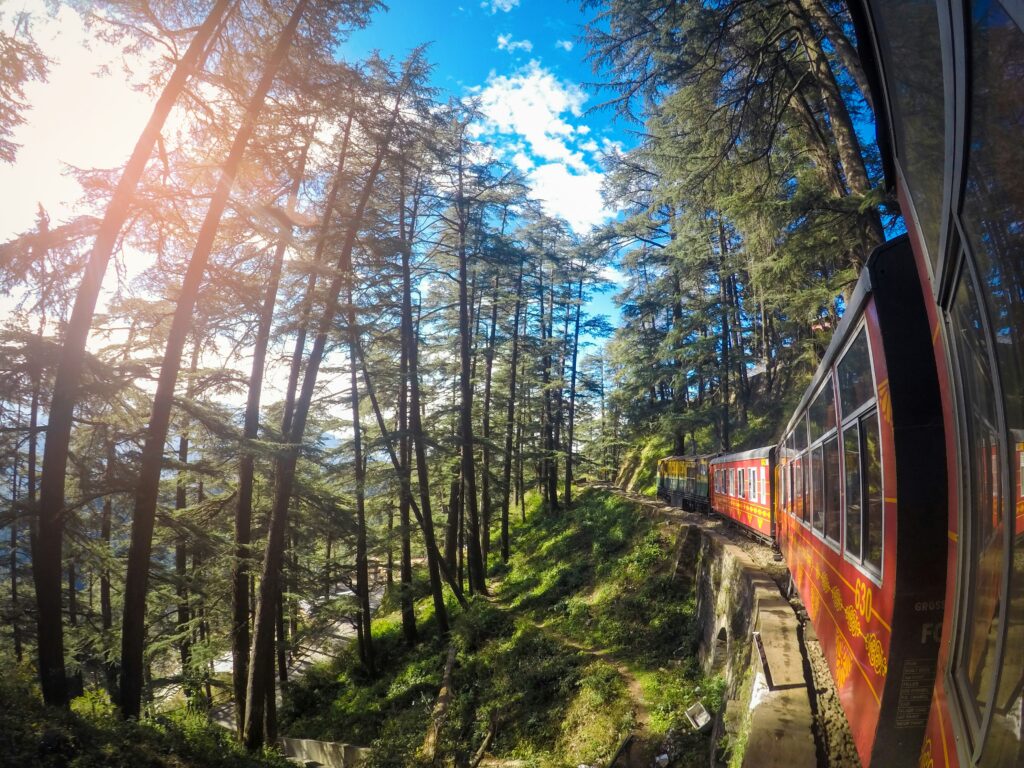
The most popular way and the best way to reach Shimla is by the Kalka-Shimla Express, nicknamed by the people as the toy train. Offering an experience of a lifetime, this UNESCO heritage train runs through 102 tunnels, crosses 988 bridges, and turns 917 curves all the while giving you breathtaking sights that will remain etched in your memories.
Six heritage trains run the tracks to Shimla. The cheapest one will cost you around Rs 65/- and the most expensive one can go up to Rs 3160/-, dropping you at Shimla railway station within 5-6 hours of an astonishing journey. To read more about the Kalka-Shimla heritage trains, their detailed timings, and ticket costs you can visit the official Indian Railways website.
Remember to book your tickets in advance since the seats get sold out pretty fast.
How to reach Shimla by Road
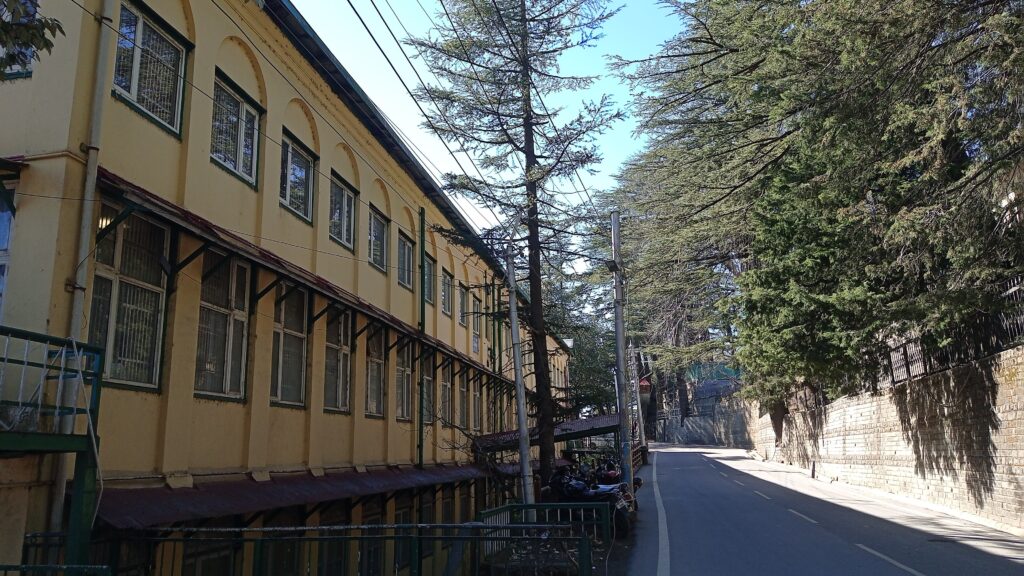
Himachal roadways are well-maintained and well-connected to Shimla. If you have your own car or even a bike, you can easily reach Shimla by following the given directions:
- Let’s say you are starting from New Delhi. You can either move from Karnal Highway or head towards NH44 (Delhi-Chandigarh Expressway).
- If you are driving from Chandigarh, drive towards NH5 which will lead you to Shimla within three-and-a-half hours.
- You will pass Kalka, Solan, and Shoghi and eventually, you will reach Shimla. The whole journey can take up to 6-7 hours.
With your personal vehicle, you can have the convenience of enjoying the picturesque views with tea stops in between. But long drives can be taxing for some, especially new drivers.
In this case, you can opt for HRTC or HPTDC buses which will drop you in Shimla within 8 to 10 hours with a ticket price that can fluctuate between Rs 500/- (if you are taking a government bus to Shimla) to Rs 2000/- (if you are planning to go in a private luxury bus).
How to reach Shimla by Flight
The nearest airport to Shimla is Jubarhati which is some 23 km away. Chandigarh airport can also be convenient for you.
Places To See In Shimla
Shimla Itinerary – Day 1
We began our journey from Delhi on the night of the 25th of January and reached Shimla by seven in the morning. It was a cold morning and the sunlight was just beginning to spread its reign when we reached ISBT Tutikandi. Most of the private buses stop at Tutikandi (also known as New Bus Stand or ISBT Shimla). From there we caught a local bus which dropped us near the railway station.
It was from there that our hunt for a hotel began. I recommend you book your hotel in advance but since we went after the New Year peak season, we were not concerned about the availability of rooms. Also, note that you will find many touts at the railway station who will persuade you that they can arrange cheap quality rooms for you in Shima at a nominal fee. You can either avail their services or do your own hunting.
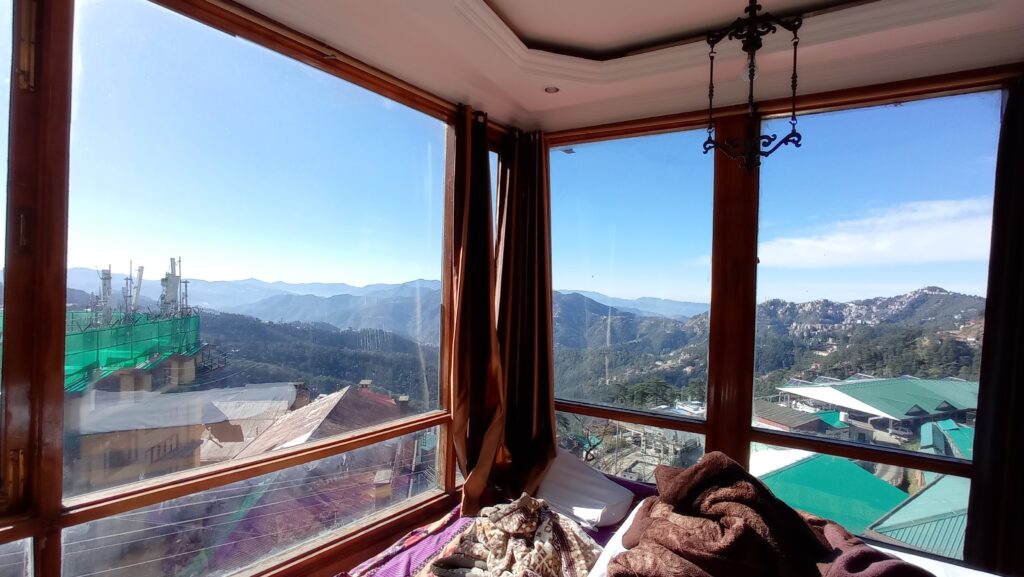
After a lot of bargaining from a lot of hotels, we found one in the lower bazaar for Rs 2000/-. It was a two-story building built quaintly from wood. Even the bed was wooden and was studded to the floor. But the views from our room were amazing.
1. The Ridge
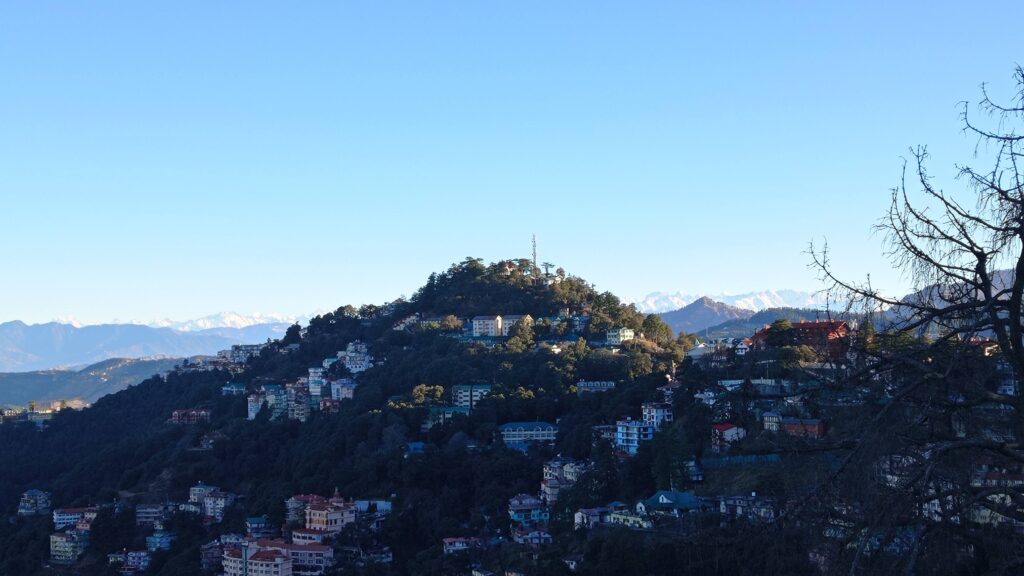
The iconic Ridge of Shimla was some 1-2 km away from our hotel and since only emergency/service vehicles are allowed in the main town, we had to walk all the way to reach there. But it was a rewarding experience.
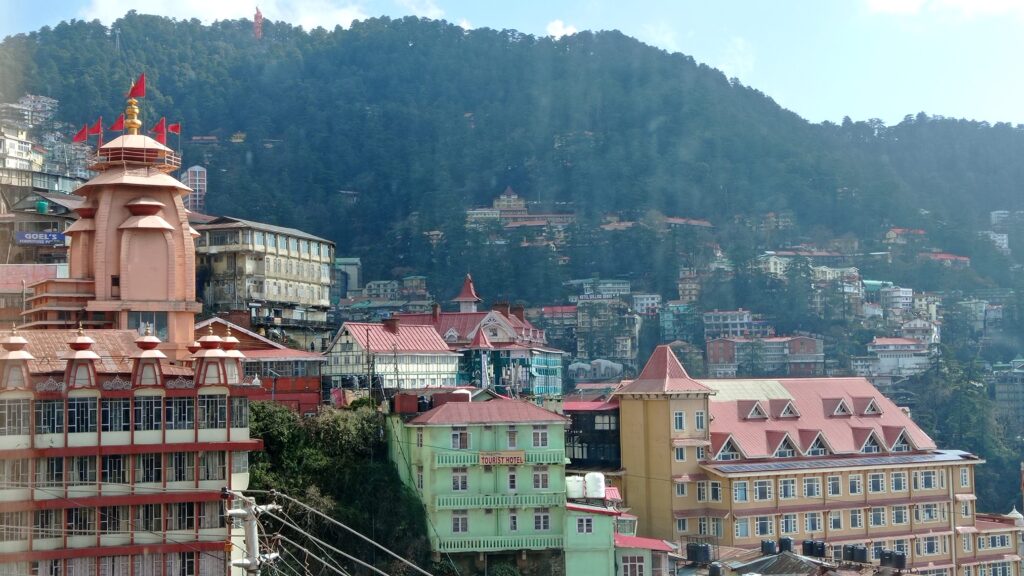
We explored the Lower Bazar and the wooden residential compartments built there that evoked a colonial aura. We climbed up towards the Mall Road and had a few refreshments. Then climbed even more to reach the Ridge. The Ridge is the base point to all the directions in Shimla and from there you can see the commanding views of snow-capped Himalayas on a clear day. There are many activities you can do on the Ridge, from people-watching to basking in the sun while eating an ice cream.
2. Christ Church
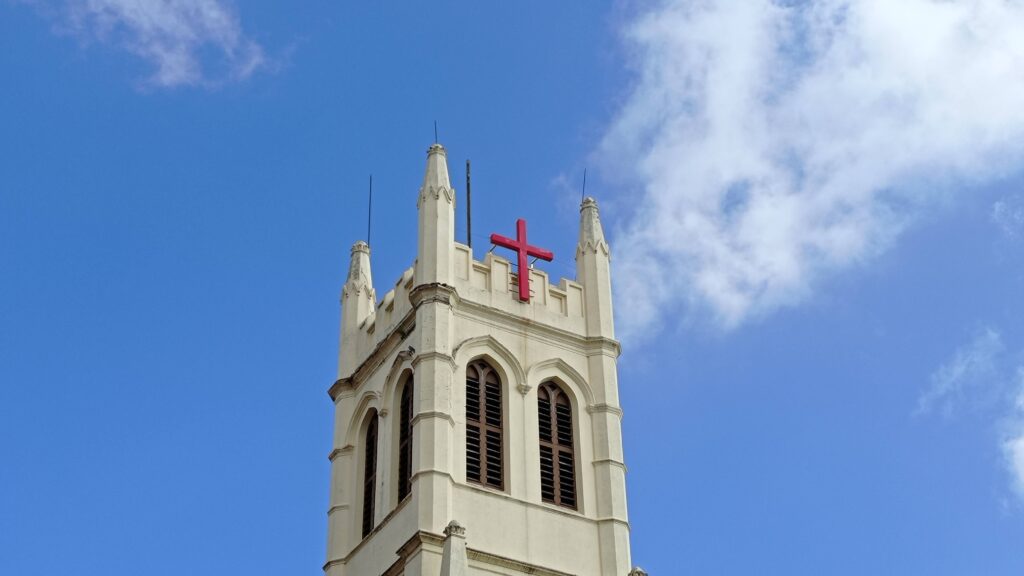
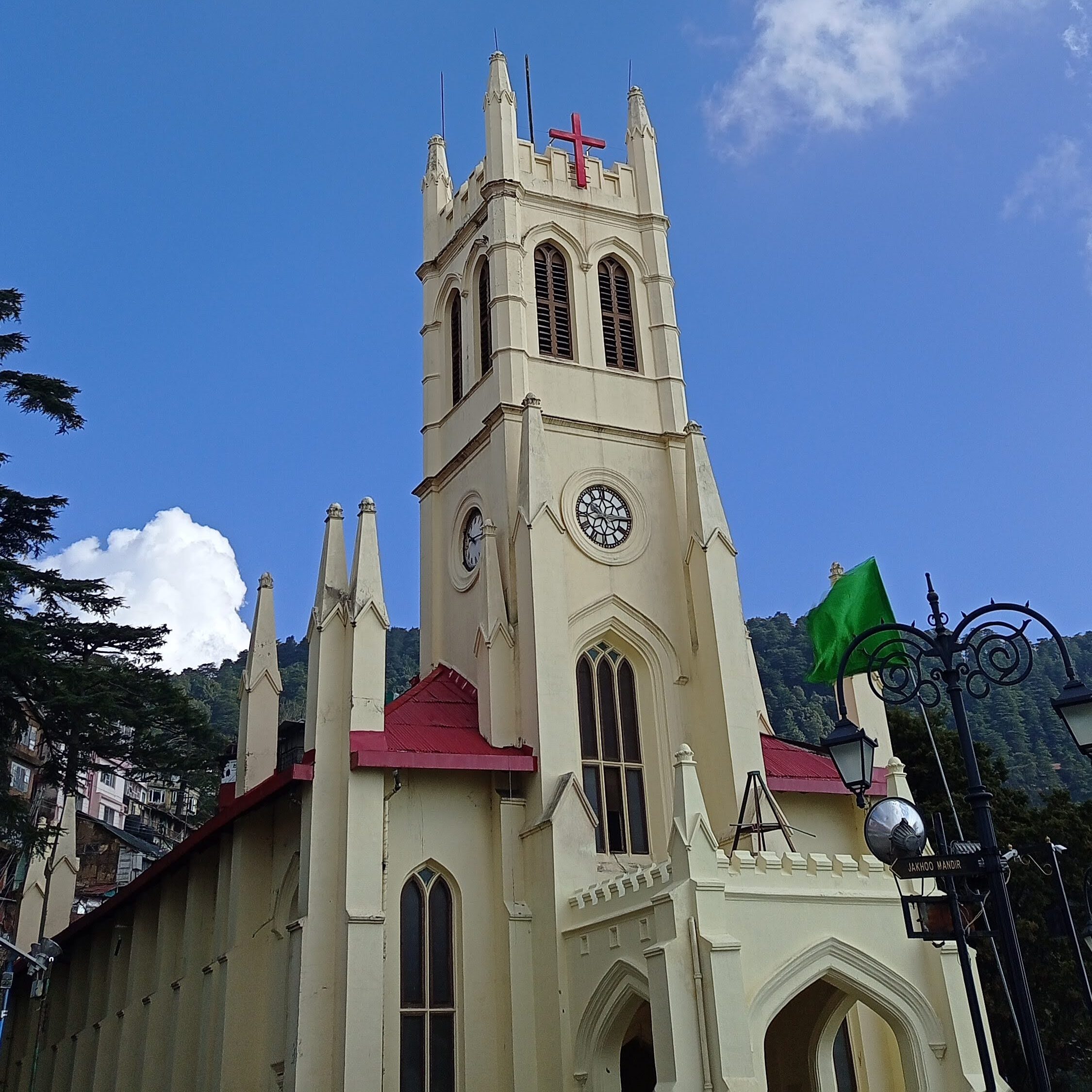
The Christ Church (built in 1857) surprised me due to its height. Its bell tower reached the sky as if its architects, John Theophilus Boileau and Lockwood Kipling wanted to build this church as close to God as possible. Its neo-Gothic style showed an unpaired grace that made all the other buildings in the vicinity mere rubbles of rock. The grander it looked from the outside, the more magnificent it was from the inside.
There was no photography allowed so I wrote this from my memory. The aisle was closed off to tourists and the altar from far away seemed like a sober bride. It was painted with stained glass that depicted scenes from the Bible. On the right of the altar, was a gigantic pipe organ installed for services. On its left, was the pulpit, and in front of it ran the wooden benches that could presumably seat 400 people. On both the walls of the Church, there were stained windows, some of which carried the colorful figures of holy men and women of Christianity. Altogether, it was a magnificent sight.
Timings
Monday – Saturday
10:30 am–1 pm
2:15–5:30 pm
3. Jakhu Temple
The trail to Jaku (or Jakhoo) Temple shoots by the side of Christ Church. It is a very well-laid path that stretches for about 2 km but it’s not the distance that makes this hike difficult, it’s the climb that’s involved in it. You’re gaining 200 meters in just half an hour by climbing from 2,205 meters on the Ridge to 2,445 meters to Jakhu Temple. Some of the parts of this hike can angle about 40 or 50 degrees which can make the hike a little tiresome for the pilgrims who are not active.
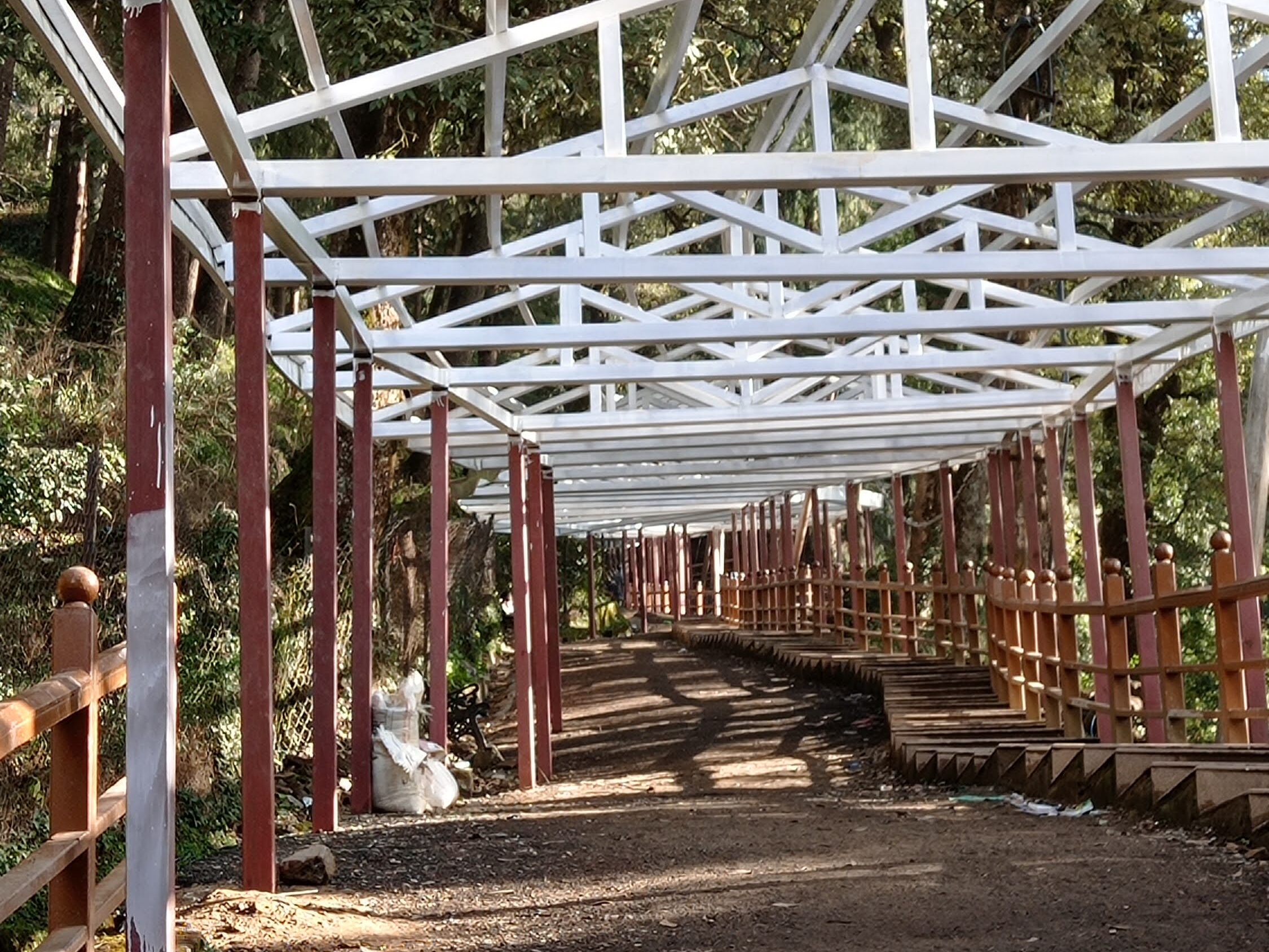
If you don’t want to put your legs to use, then you can also opt for the Jakhu Ropeway. The ropeway will help you reach the temple within 6 minutes while also giving you stunning views of Shimla. Please note that there can be a long cue for the ropeway so plan your trip to Jakhu Temple accordingly.
Timings
All days 5 AM – 9 PM
Tickets
Entry Free
Jakhu Temple Ropeway Ticket Prices
One-Way
Adult – Rs 252/-
Child (3-12 years of age) – Rs 200/-
Two-Ways
Adult – Rs 467/-
Child (3-12 years of age) – Rs 381/-
Tickets for children below 3 years are complimentary. Also, note these are non-taxed prices. To find out more information visit Jakhu Ropeway Shimla.
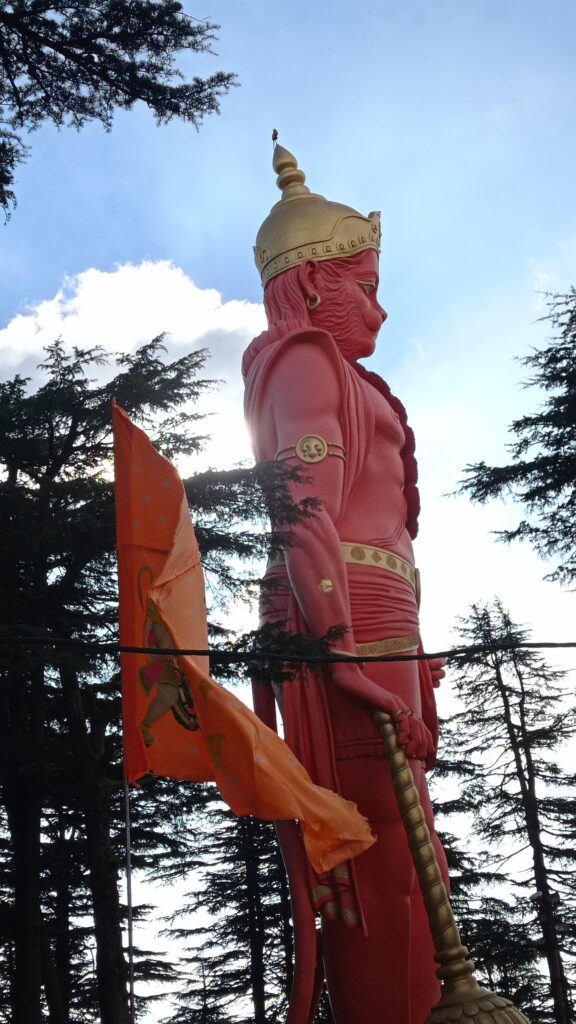
It was an awe-inspiring moment to see the statue with my own eyes. We visited the temple which was built in the Kath Kuni style of architecture and rested on the bench for a while to prepare for our descent (which was way easier). The fog began to envelop the place, cutting any source of sunlight and the temperature began to drop suddenly. Cold gusts of wind made my face numb so we shortly mapped our way downhill.
4. Lakkad Bazar
We came to the Ridge and dawdled towards the Lakkad Bazar. It’s a market where you can find several shops that sell various items from clothing to souvenirs. After our challenging hike to Jakhu Temple, we were famished, so we opted to eat our belated lunch there. Many eateries in this market serve both vegetarians and non-vegetarians. We went into a local shop and ate our hearts full. The food was affordable if not exceptionally delicious.
As dusk approached, we started the long walk to our hotel, tired from our jaunts and wayside explorations. We crashed into the bed and snoozed the night away.
Shimla Itinerary – Day 2
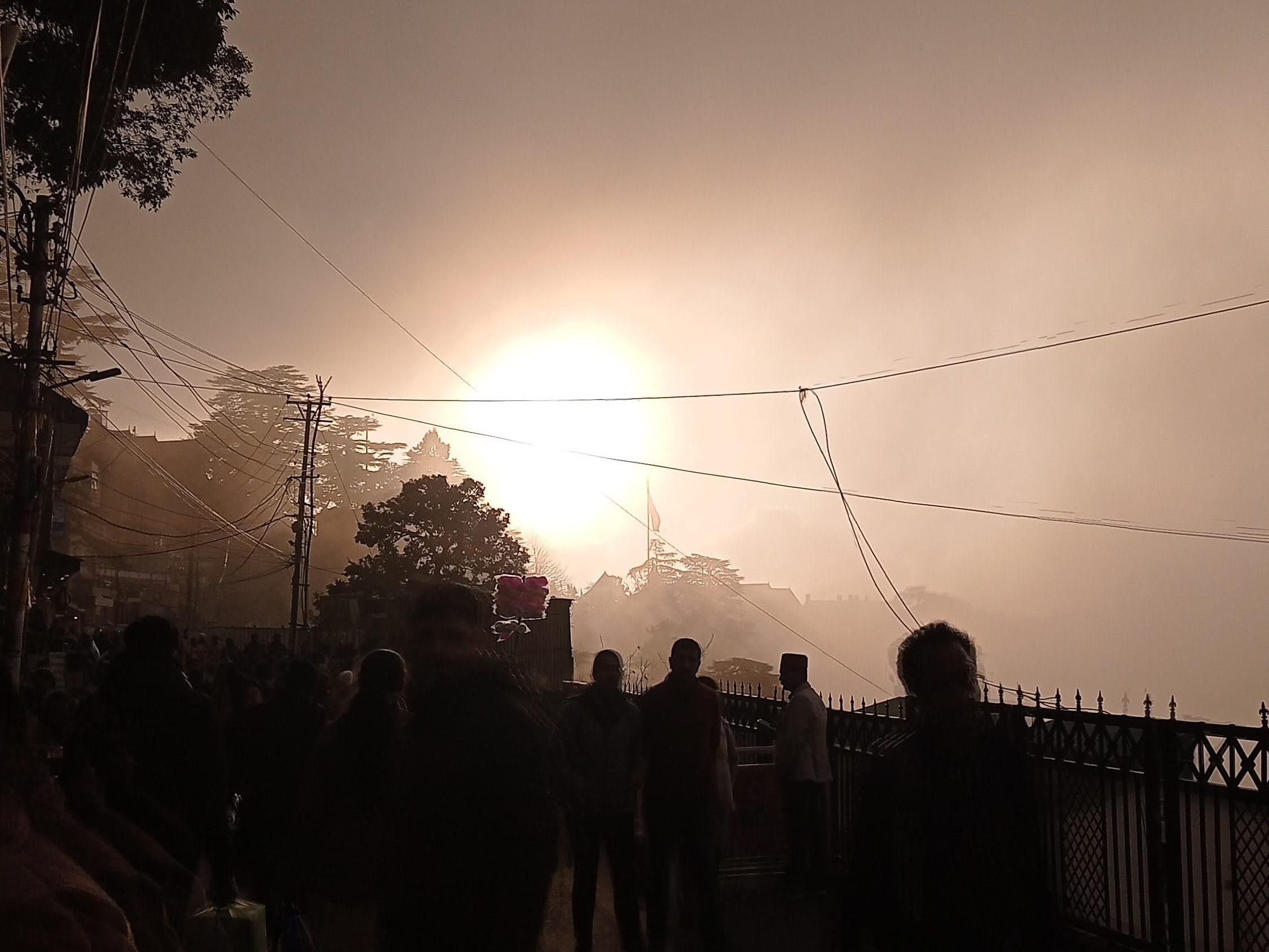
It was a sunny morning like the one before when I woke up to the view of the sun-kissed hills of Shimla. All my friends were asleep. So I sneaked out of our hotel room and went to the Ridge to catch a glimpse of the rising sun. It was the 27th of January and schoolchildren were waiting in the school uniforms for their bus to come. In the morning, the hustle-bustle of tourism ebbs, and Shimla becomes just like any other city where people commute to their shops, children to their school, women go out grocery shopping, and dogs sunbathe in the middle of the roads. I ate my breakfast in the heritage building of Indian Coffee House and went back to prepare for another day of adventure.
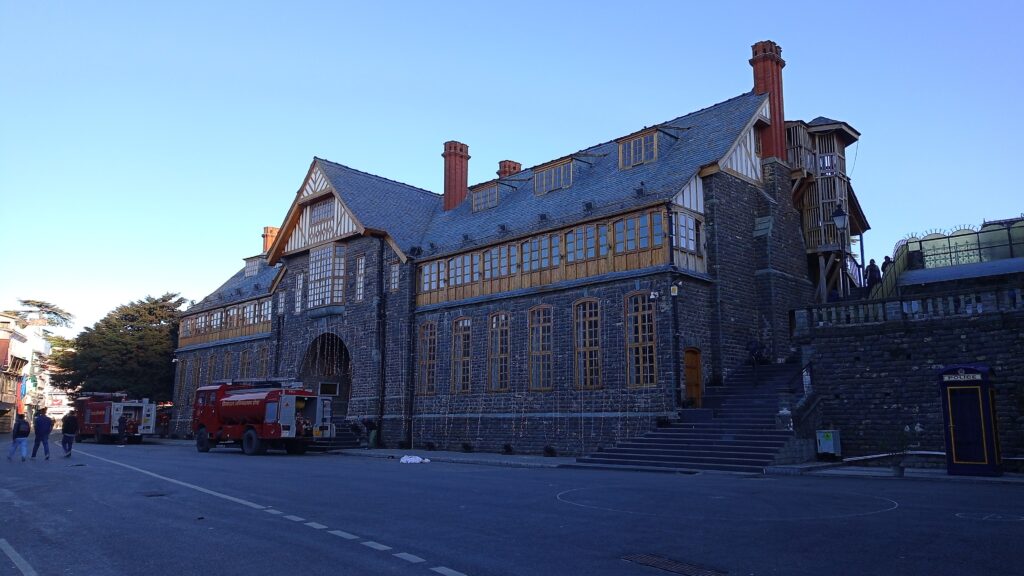
We had licked almost every corner of the main town of Shimla. So we decided to go a little off the map, on a D-I-Y heritage walk.
5. Gaiety Theatre
As my friends hobbled from their last day’s struggles to a breakfast place, I went to explore the famous Gaiety Theatre of Shimla. It’s an easily missable place situated beside the Town Hall. The man who attended me as my guide that day was Mr Rajnish who now owns his own travel company by the name of Northern India Immersive Tours.
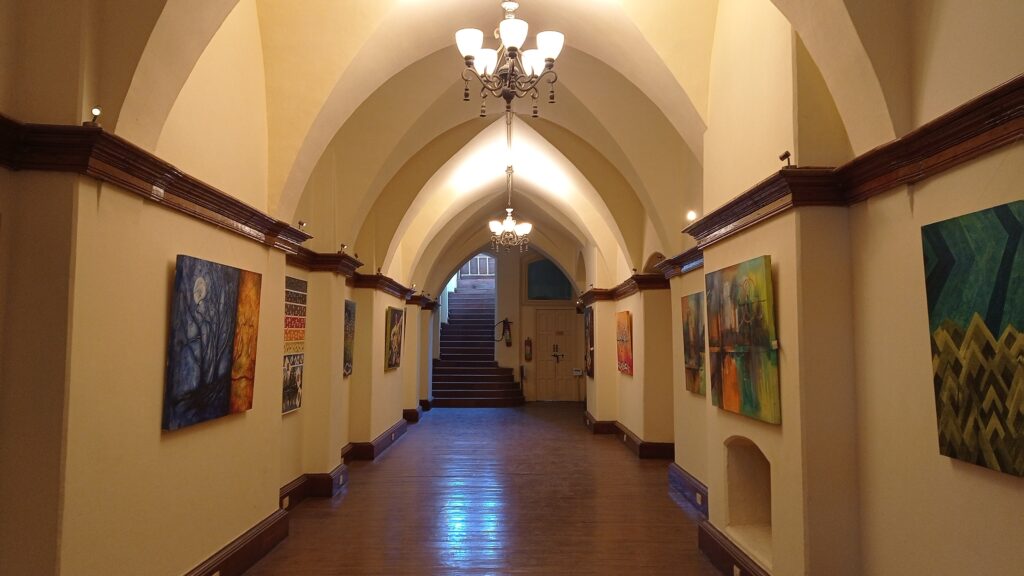
We walked towards the auditorium through a hallway on whose walls historic picture frames were nailed. A group of all ages was practicing theatre exercises on the stage. We sat in one of the boxes to get an overview of the whole theatre. Built in 1887 and architectured by Henry Irwin, the theatre was the only place of entertainment for the Britishers in Shimla. It originally had five stories, two of which were donated to the Town Hall when it was found structurally weak in the early 1912.
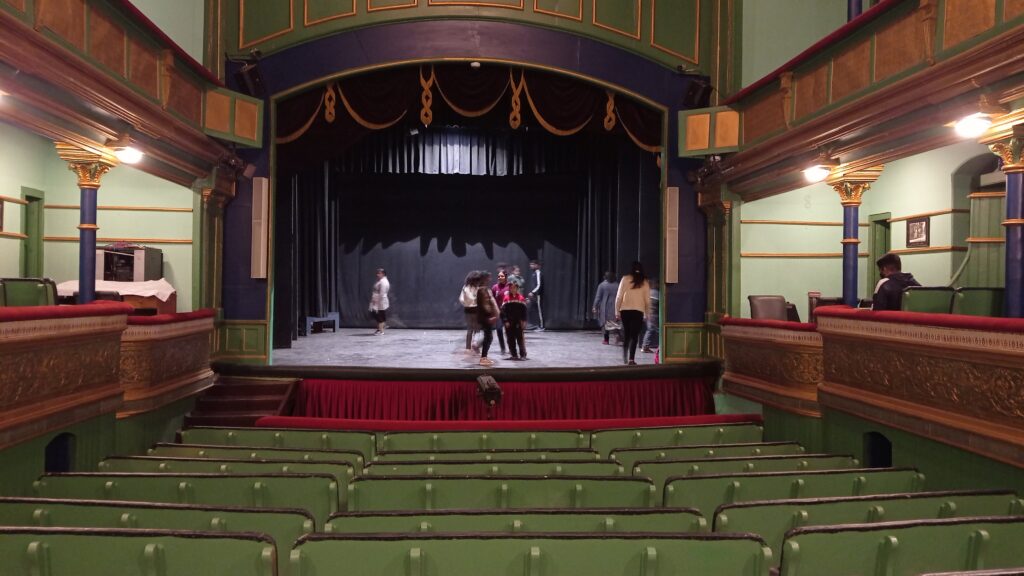
It was renovated in 2003 by Ved Saigan and now acts as a public theatre where there are constant shows on the run. Many prominent figures have performed on the stage of Gaiety Theatre including Rudyard Kipling, Prithvi Raj Kapoor, Balraj Sahni, Anupam Kher, and Naseeruddin Shah. On the upper floor is the Lalit Kala Academy where exquisite art and paintings are exhibited.
Timings
Every Day
9 AM – 5 AM
Tickets
Gaiety Theatre – Rs 100-200 /-
Entry into Lalit Kala Academy is free.
An Interesting Incident
On my way back to meet my friends, I bumped into Dr Rajender Attri who was holding an exhibition. He had a treasure trove of original images that featured Mahatma Gandhi and the first Chief Minister of Himachal Pradesh, Dr Y.S Parmar. All the photographs were unique and were assembled after years of research. With Dr Attri’s request, I will feature a few pictures on this blog so that people can have a better understanding of the man who shaped a nation and the man who shaped a state.
6. Bantony Castle
I reunited with my friends at Scandal Point, and we all decided to walk all the way to the Viceregal Lodge, which was some 2.5 km away. Although it is easier to drive if you have a car. But we were eager to explore and began our journey immediately.
We saw many heritage buildings on our way, like the YWCA building, which was once a library, the BSNL building, and the most beautiful of them all, the Bantony Castle.
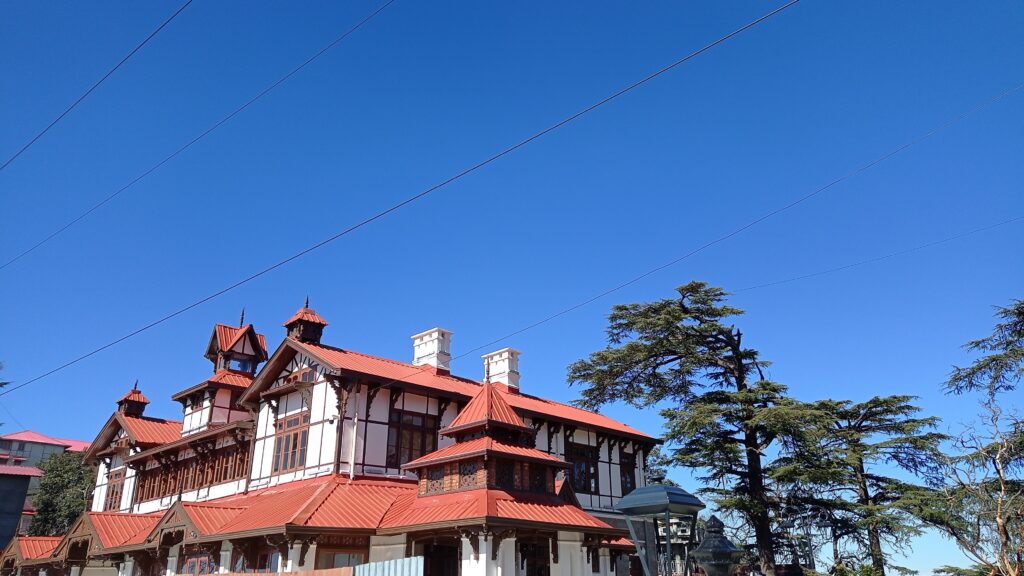
Built on one of the seven hills of Shimla, the Bantony Castle encircles around 20,000 square meters of land. It was constructed in 1880 as a royal summer residence of the Maharaja of Sirmaur. The two-story structure was designed in the mock Tudor style and was protected by cast-iron railings with the coat of arms belonging to the state of Sirmaur. It’s stately in design but restricted to public viewing. We were very disheartened to learn that tourists were not allowed to visit, 125 years of stories are left to be unseen.
But there are still some good tidings as I came upon the news that this imperial castle is soon to be opened as a museum after being renovated meticulously.
7. Kali Bari Temple
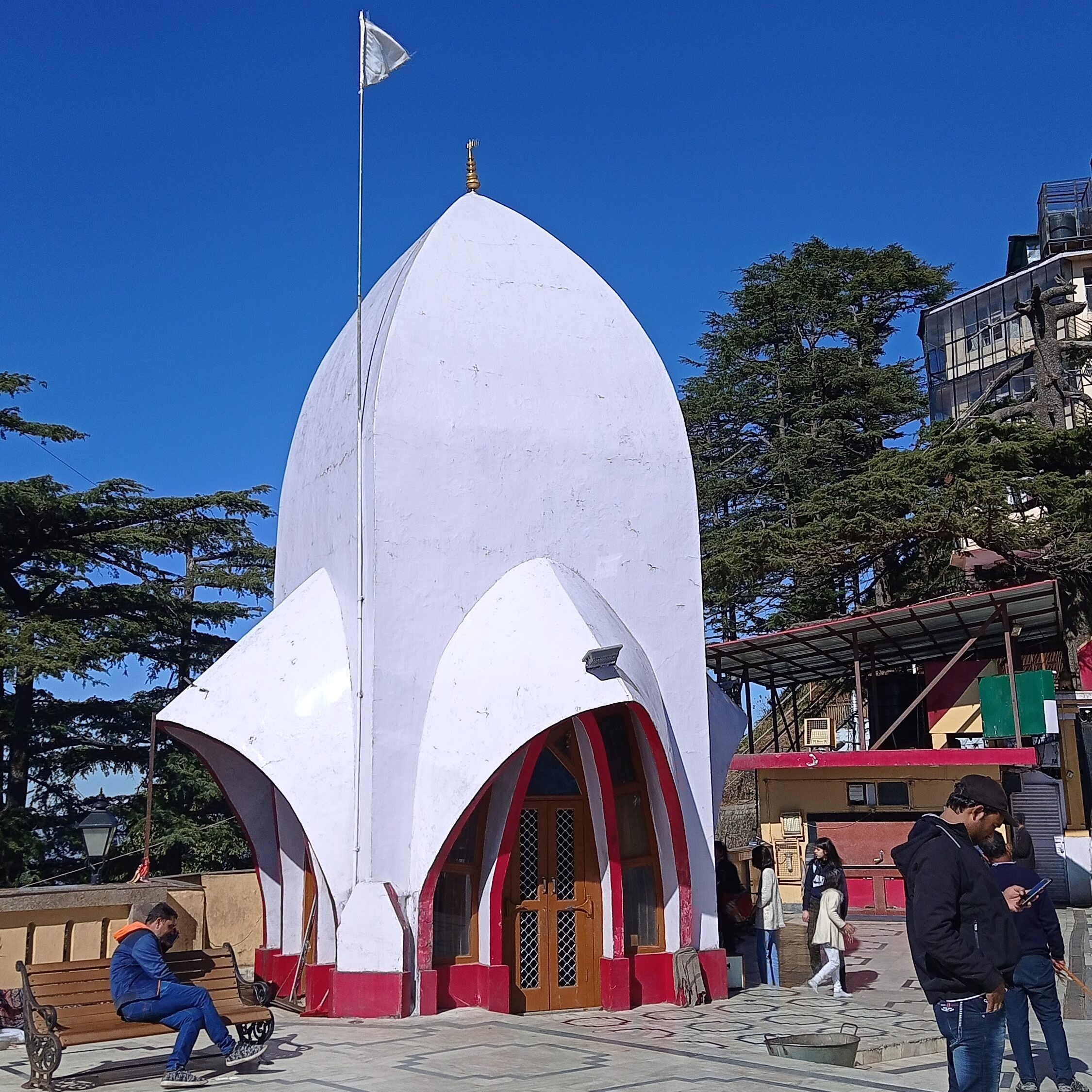
A few minutes of walking will lead you to the famous Kali Bari Temple of Shimla. It’s a very sacred place that emanates a peaceful aura. The reigning deity, Goddess Kali, was said to have been reincarnated near Jakhu hill by the name of Shyamala. Originally built by a Bengali Brahmin in 1823, this temple was later shifted to the Bantony Hill by the Britishers where it now stands today.
Timings
Open every day
Entry
Free
8. Himachal State Museum
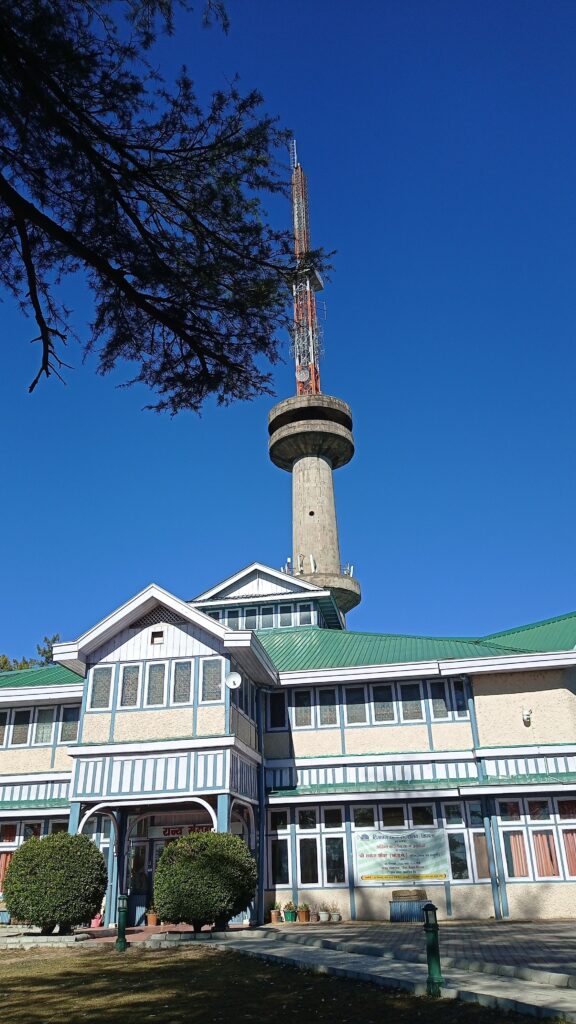
The walk from Kali Bari to the Himachal State Museum is a pleasant one. You will pass many heritage buildings like the Railway Board Building, Gorton Castle, Himachal Pradesh Vidhan Sabha, and India Post Office.
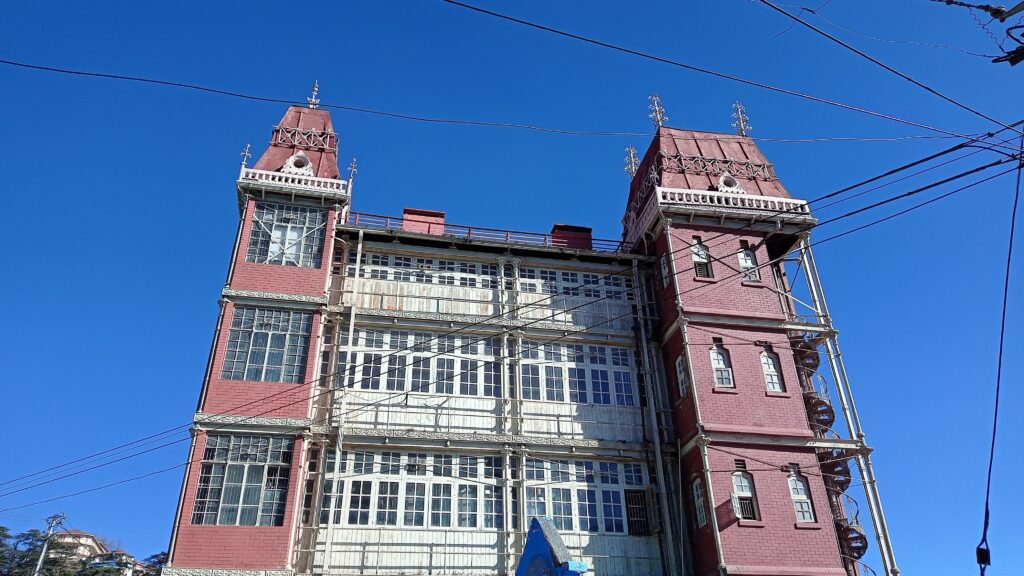
The last push to the museum is full of rewarding views. The museum itself is filled with informative sections that tell the tale of the history of Himachal from archaeological artifacts, coins, jewellery, and the dress of its people to modern paintings, postage stamps, and weapons.
Timings
Tuesday-Sunday (Monday closed)
10 AM – 5 PM
Ticket Price
Rs 20/- for Indians
Rs 100/- for Foreign Nationals
Camera Fee is Rs 50/- for Indians and Rs 100/- for Foreign Nationals & Research Scholars.
9. Viceregal Lodge or Indian Institute of Advanced Studies
We reached the Viceregal Lodge in the evening and waited for the guided tour to begin. Ours was the last slot, so we were extremely lucky with time. The whole place was out of an X-Men movie. There were well-maintained gardens with flowering shrubs that complimented the giant Palace.
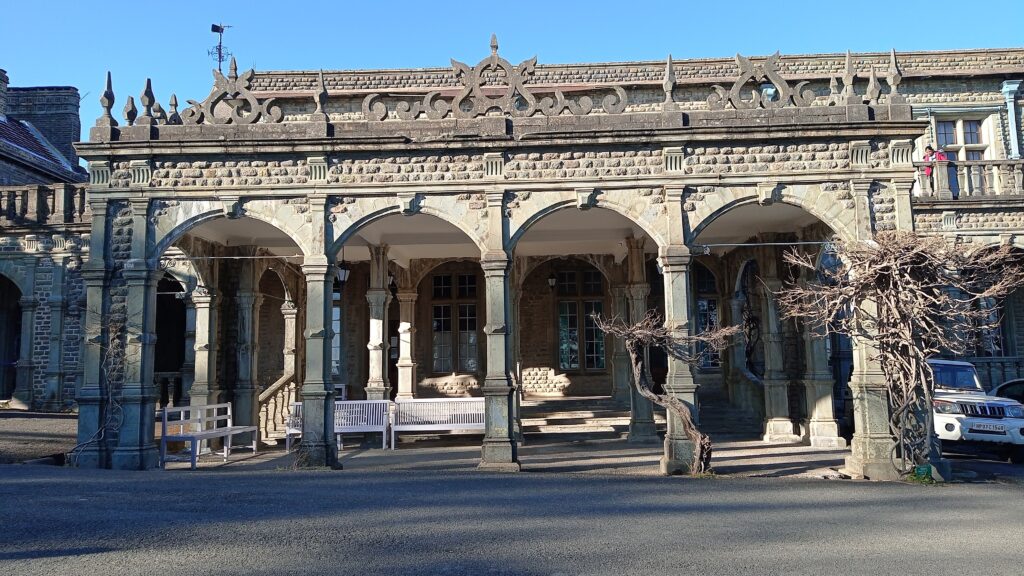
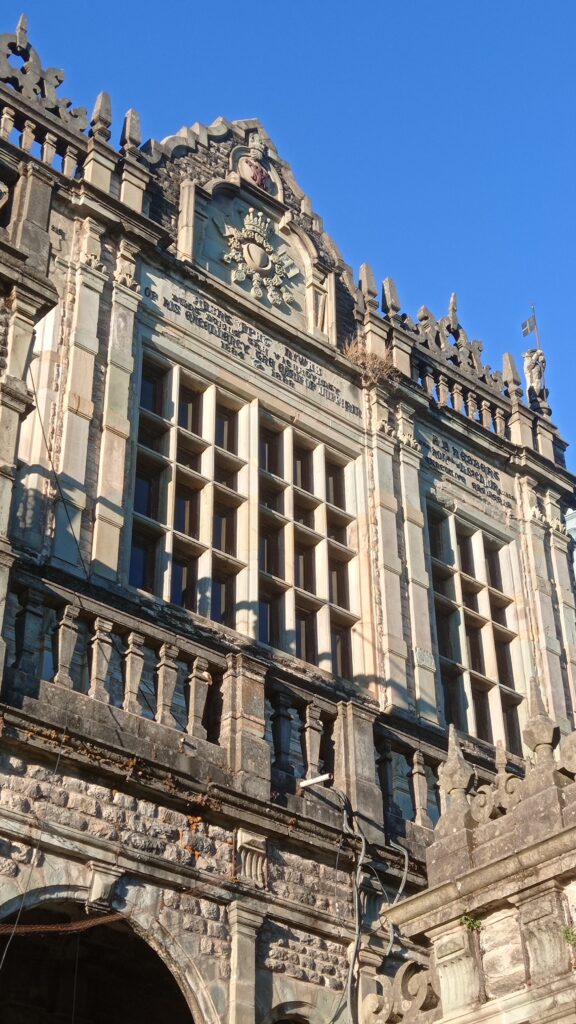
Our guided tour began and since no photography was allowed, I can only describe in words what I saw. The Lodge passed through many hands, many departments, and many names. Initially, when its construction was completed in 1888 under the same architect as the Gaiety Theatre (Henry Irwin), its purpose was to house the British Viceroy of India. But it was repurposed on the eve of Independence as the summer house for the President of India who saw little use of it and donated it to the Ministry of Education. It was converted into a center for higher studies.
The structure itself is very exquisite from the outside with intricate stonemasonry. Inside, different rooms are laced with wood, mainly teak which was imported from Burma (present-day Myanmar). Walnut and cedar wood are also used in the ceilings which gives this regal palace a look one cannot see anywhere in India.
After our guided tour we stayed for a while enjoying ourselves in the garden, but as the redness of the dusk crept into the sky we headed our way back to the main town. Also, I tasted the best coffee in Shimla outside the Viceregal Lodge parking.
Timings
Tuesday-Sunday (Monday closed)
10:30 AM – 5:00 PM
Ticket Price
Rs 30/- for Indians
Rs 100/- for Foreign Nationals
10. Chadwick Falls
If you have enough time on your hands, you could also drive to Chadwick Falls which is about 6 km away from the main town. Walking there was out of the question, so we skipped this hidden gem.
We were hungry from our long excursion and went to a famous restaurant where we devoured the best food in Shimla while listening to old Bollywood songs. This is a memory which I will treasure for a lifetime.
Shimla Itinerary – Day 3
11. Kufri & Chail
Kufri, a picturesque hill station in Himachal Pradesh some 10 km away from Shimla offers a serene escape from the hustle and bustle of city life. It is synonymous with breathtaking natural beauty, featuring lush green valleys, snow-capped mountains, and dense forests. The panoramic views of the surrounding Himalayan peaks are truly mesmerizing.
Visitors can indulge in thrilling activities like skiing, tobogganing, hiking, and horse riding, making it a perfect destination for adrenaline junkies.
The highest point in Kufri, Mahasu Peak offers stunning panoramic views of the surrounding landscapes. The trek to the peak is both challenging and rewarding, making it a must-visit for nature lovers and adventure seekers.
Kufri is also the home to the Himalayan Wildlife Zoo, where visitors can witness a diverse range of flora and fauna native to the region. The zoo is especially famous for its collection of rare Himalayan species like snow leopards and musk deer.
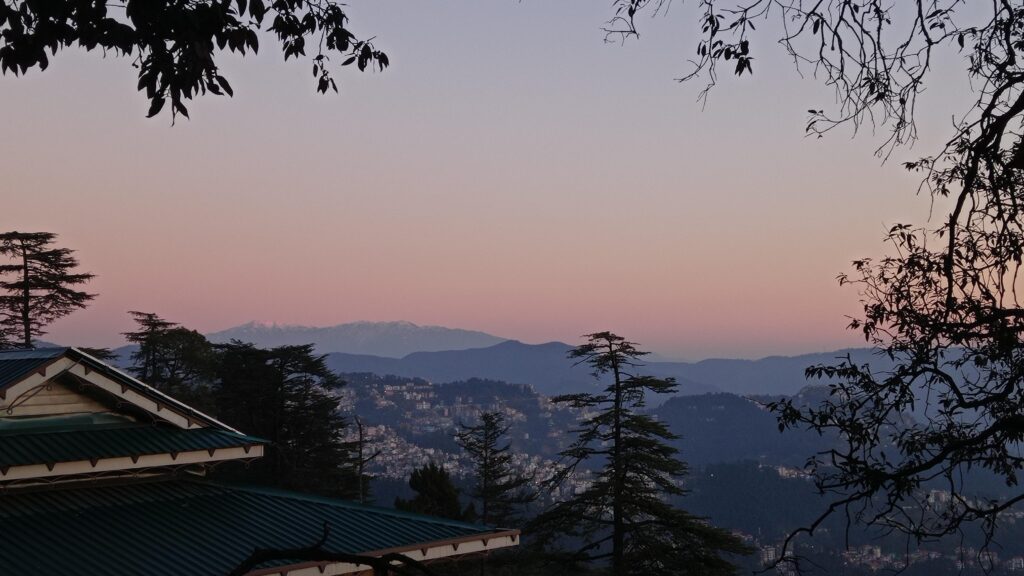
Another drive-away destination near Shimla is Chail, a former royal residence, the Chail Palace. It is another must-visit spot that exudes grandeur and history. It has the world’s highest cricket ground, perched at an altitude of 2,250 meters. Additionally, the Chail Wildlife Sanctuary is a haven for wildlife enthusiasts, offering a chance to spot various species of flora and fauna in their natural habitat.
Shimla Itinerary – Day 4
Narkanda
Narkanda, a picturesque town nestled in the hills of Himachal Pradesh, that offers the visitors of Shimla an opportunity to witness snow. Narkanda boasts breathtaking vistas that rejuvenate the mind and soul. It has pristine lakes and high peaks like the Hatu Peak. The tranquil ambiance and crisp mountain air make it a perfect retreat for nature lovers seeking solace.
The Last Line
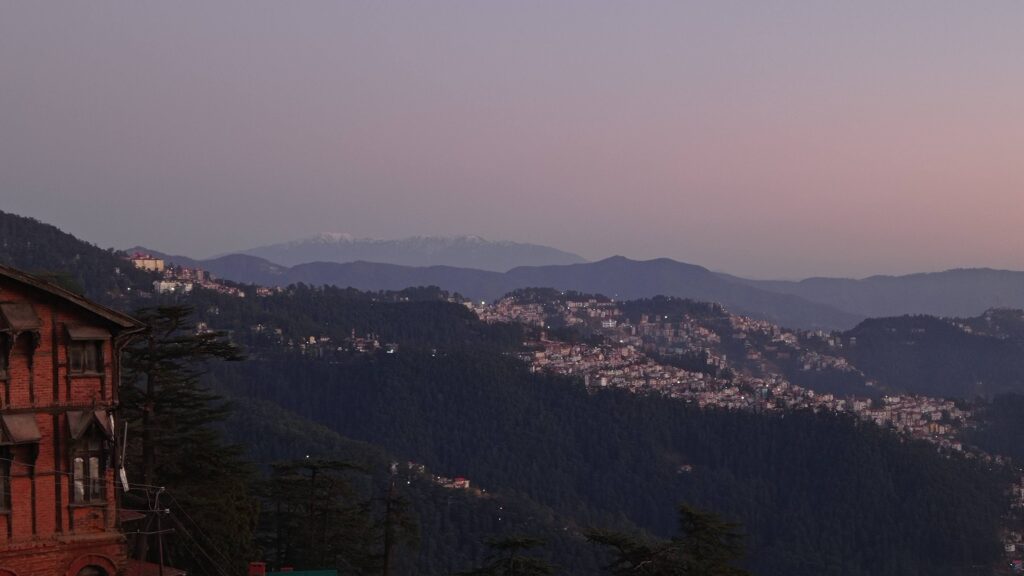
Shimla offers the perfect amalgamation between Indian craftsmanship and British architecture. Almost every other building poses an unseen heritage or has a historic relevance in Shimla. This is why this city will always remain close to my heart and beloved in my memories.
I only went there to go to Jakhu Temple. 100% recommend for darshans